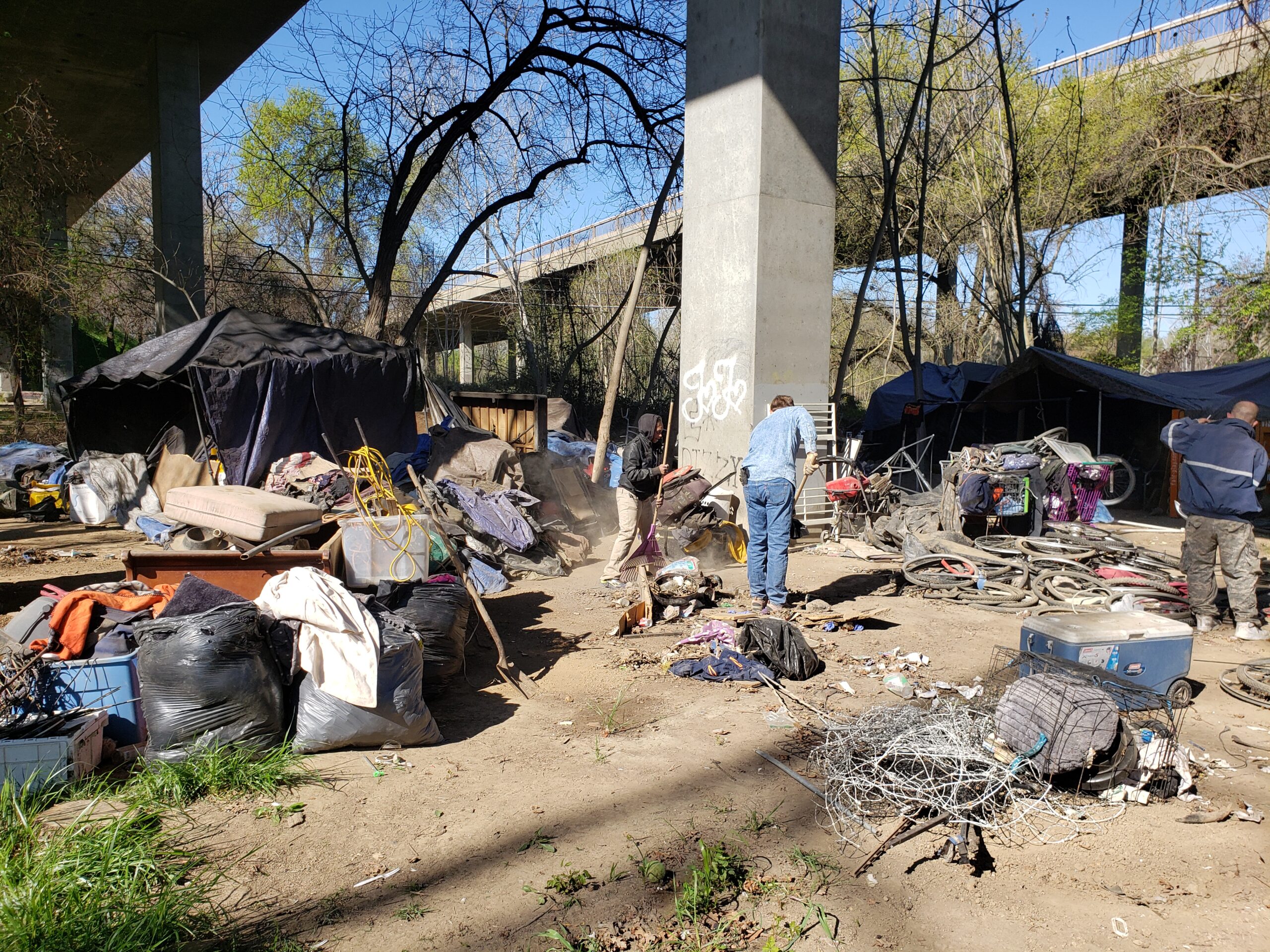
Local leaders joined ARPF volunteers, board members and staff on March 12 for a clean-up near the Northgate River Access that allowed them to get a firsthand perspective at the destruction that’s taking place on the Parkway and discuss solutions. This was an opportunity for our local leaders to hear from ARPF volunteers, board members and staff as well as interact with illegal campers on the Parkway. We appreciated the exchange of ideas while the City, County and ARPF worked together to make a difference in our community. We look forward to continued collaboration. Thank you to all of our local leaders who joined us: Assemblymember Kevin McCarty Supervisor Don Nottoli Supervisor Rich Desmond Supervisor Patrick Kennedy Mayor Darrell Steinberg Councilmember Katie Valenzuela Sacramento County Recreation and Park Commissioner Claudia Goss Sacramento County Recreation and Park Commissioner Dan Gonzales Sacramento County Regional Parks Director Liz Bellas Sacramento Fire Department Fire Marshall Jason Lee Thank you also to the media that came out to tell the story. If you haven’t yet, check out the coverage: KCRA 3 ABC10 FOX 40 Inside Publications (Coming Soon!)
Continue Reading
Thank you for learning more about getting involved. Click here for the Email/Letter and Call templates CONTACT INFORMATION FOR LOCAL LEADERS Mayor Darrell Steinberg, City of Sacramento Vice Mayor Angelique Ashby, City of Sacramento District 1 Councilmember Sean Loloee, City of Sacramento District 2 Councilmember Jeff Harris, City of Sacramento District 3 Councilmember Katie Valenzuela, City of Sacramento District 4 Councilmember Jay Schenirer, City of Sacramento District 5 Councilmember Eric Guerra, City of Sacramento District 6 Councilmember Rick Jennings II, City of Sacramento District 7 Councilmember Mai Vang, City of Sacramento District 8 Supervisor Don Notolli, Sacramento County District 5 – Chair Supervisor Richard Desmond, Sacramento County District 3 – Vice Chair Supervisor Phil Serna, Sacramento County District 1 Supervisor Patrick Kennedy, Sacramento County District 2 Supervisor Sue Frost, Sacramento County District 4 ALSO SEND TO: Liz Bellas, Sacramento County Regional Parks Director Leonard Orman, Chief Ranger
Continue Reading
01March
Parkway Partners is Back!
We are bringing back our Parkway Partners program. This is a tool for local businesses along or near the American River Parkway to show their community that they support the efforts made to conserve and protect our Sacramento treasure. There are three levels of financial investments in which a businesses can chose to participate, with each level offering multiple benefits, including features on our website, ARPF promotional videos, social media shares and features in our monthly newsletter sent to over 16,000 subscribers. We’re looking to pair with new partners for 2022. For more information about the program and to discuss how your business fits with the Parkway, contact April Potter at (916) 486-2773 or apotter@arpf.org. An investment in the Parkway is a valuable investment in our community.
Continue Reading
At the January 25 meeting, the Sacramento County Board of Supervisors approved changes to the Regional Parks Department Fee Schedule, which included an increase in park pass fees. Starting March 1, prices for annual passes will increase to: Vehicle — $60.00 For standard motor vehicles. Motorized Vessel/RV — $120.00 For RVs and motorized watercraft 22 feet and larger and other oversized vehicles or trailers. May also be used for the vehicle alone. *Reminder that the County of Sacramento discontinued the passes for horse trailers and non-motorized watercraft this year. Another change to the park passes is the addition of a Senior Discount, which will be $30. An ID will need to be shown at time of purchase. The discounted Low Income Pass and free passes for Distinguished veterans will continue. We will provide more information on our website and social media once it becomes available.
Continue Reading
03February
Demand Letter: Progress Being Made
In January, the American River Parkway Foundation (ARPF) submitted a letter to the County of Sacramento and City of Sacramento demanding they take action to alleviate the amount of illegal camping on the Parkway and provide funding for restoration efforts. Park rangers estimate 2,000 people are spending the night/living along the 23-mile stretch of the Parkway. This is having an impact on the wildlife, the environment, critical infrastructure and visitors by diminishing water quality, increasing fire danger and introducing contaminants. Read the full demand letter here For years, local leaders have developed plans to provide resources and housing for the unhoused throughout the County. With record amounts of funding available, it’s now time for the County and City to work together to implement solutions and get as many of these individuals as possible into housing where they can receive the services they need. Since the submission of the letter, ARPF has been in contact with two Sacramento County Supervisors and four Sacramento City Councilmember as well as a number of organizations and individuals focused on helping the unhoused. Our outreach is continuing with the goal to connect with more of our local leaders and advocates. Media also had an interest in our story. We provided comments to The Sacramento Bee and conducted interviews with CBS 13, ABC10, KFBK, Capital Public Radio and The Carmichael Times explaining why we submitted this letter and what we are hoping to see from our local leaders. You can find links in our social media. Please stay tuned for updates as our efforts continue.
Continue Reading
28October
Great American River Clean-Up 2021
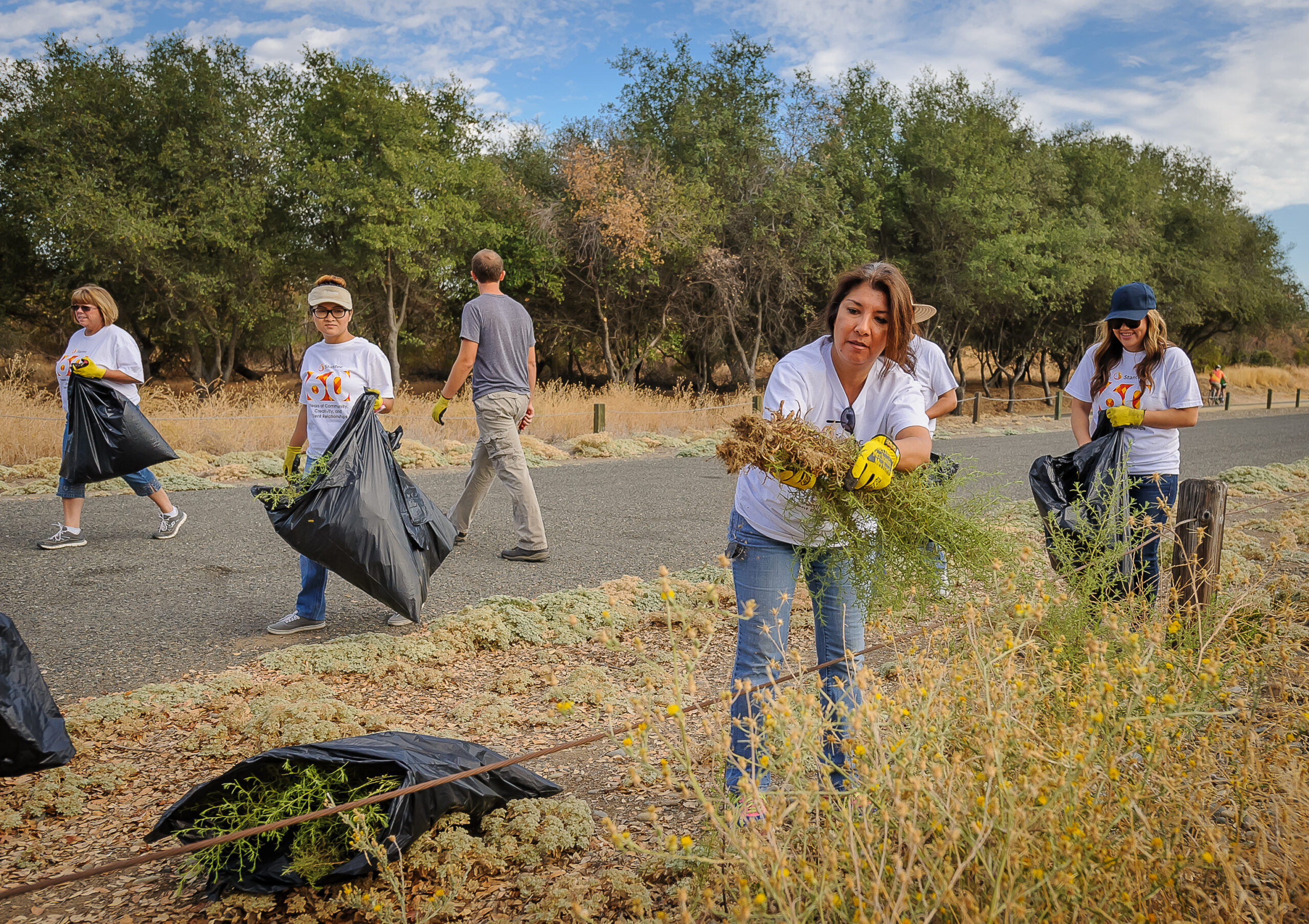
On Saturday, September 18, 2021, more than 800 local residents removed 23,000 pounds of trash along the river in the span of just three hours for the annual Great American River Clean-Up (GARCU) in conjunction with the California Coastal Commission’s annual statewide clean up event. Volunteers of all ages gathered to collect trash and debris from Discovery Park to the Nimbus Fish Hatchery. Not only is trash unsightly for American River Parkway visitors, it pollutes our waterways, disturbs natural habitats and harms wildlife. The total weight of garbage collected was the equivalent of about a school bus! Amidst this massive haul were some unusual items, including a prom dress, a yarn voodoo doll and a side chair with matching ottoman. The 2021 GARCU event was held from 9:00 am to 12:00 pm at 17 different locations along the 23-mile long Parkway. Participating groups included: Sacramento Valley Returned Peace Corps Volunteers Employees of Hearst Broadcasting Buddhist Tzu Chi Foundation Members Church of God International Grounded. CGI Consulting Metro Edge Sacramento Association of Realtors Student Action Club at Del Oro Sac State Student Environmental Organization Sac State Community Engagement Center Girl Scout Troop 3997 Students of Jesuit High School Gold River Community Association GARCU is our largest annual clean-up event. For nearly 40 years, we have invited the community to take part in this statewide movement that mobilizes tens of thousands of volunteers throughout California to clean up trash from local beaches, lakes and waterways. In past years, up to 2,100 local volunteers have come out to help remove debris from multiple areas along the river, highlighting why the Parkway is the greatest civic amenity in this region. Our financial sponsors are an important part of APRF volunteer efforts, providing funds for supplies, such as trash bags, nitrile gloves, hand sanitizer, first aid kits, water and snacks. For more information about volunteering for or sponsoring a Parkway clean up event, please contact us at (916) 486-2773 or email volunteer@arpf.org.
Continue Reading
06October
Untitled
Bikes. Beer. BBQ. What better way to have fun and support Sacramento’s uniquely remarkable urban park? On Saturday, September 25, 2021 ride your bicycle along the beautiful American River Parkway, then party with us at William B. Pond Park with tasty barbecue, refreshing beer, and live music. Your registration fee includes support for your ride with rest stops along three route options, festival entry, lunch, beverages, and one drawing ticket for a chance to win awesome prizes! Additional prize drawing tickets will be available for purchase during the event. Cash only! Featuring live music from Rod Stinson Band and catering by Rossi Catering. The Route Want to bring the kids along? Or, maybe you’d like to skip the ride and just join us for the food and fun? We have options for you! We offer multiple options for cyclists of any ability. Choose from three suggested routes, ranging from 5 miles to 26 miles, or challenge yourself by riding the entire paved Jedediah Smith Memorial bike trail. All three event routes start and finish at the William B. Pond recreational area and are supported with rest stops along the way. Cruiser Route — 5 miles Depart at 9:00 am. Ride upstream and turn around at Hagan Park. Fixie Route — 12 miles Depart at 8:00 am. Ride downstream and turn around at Guy West Bridge. Roadie Route — 26+ miles Depart at 7:00 am. Ride downstream and turn around at Discovery Park. Optional add-on: Ride upstream and turn around at Nimbus Fish Hatchery. Rest Stop Hours: Discovery Park 7:30 am to 10:30 am Guy West Bridge 8:00 am to 11:30 am Upper Sunrise 8:30 am to 12:00 pm Team Challenge Are you a member of a cycling team or club? Include your team name with your registration to compete for our annual Ride the Parkway team prize for most riders! Be sure all teammates enter the same team name to be included in the count Party Details Post-ride festivities begin at 11:00 am at William B. Pond Park recreational area. A delicious barbecue lunch will be provided by Rossi Catering (vegetarian options will be available), along with beer sponsored by local breweries, while you enjoy live music by the Rod Simpson Band. Plus, your drawing ticket will give you a chance to win cool prizes from local restaurants, breweries, cycle shops, and more. Additional tickets available for purchase during the event. Cash only! Bring your lawn chair or picnic blanket! Our NEW Ride the Parkway bike jerseys are now available to order! Orders from our jersey vendor Jakroo typically take about two weeks from online purchase to product delivery, so be sure to place your order in advance of the Ride the Parkway event. We recommend placing your order by September 1st to make sure you have your jersey in time for the Ride the Parkway event. $79 each ARPF arranged a discounted “team” price of $79 per jersey. (Regular retail price for the Jakroo FONDO jersey style is $99.) JERSEY DETAILS: • Comfortable fit for every rider • Full length hidden YKK zipper • 3 rear cargo pockets • Additional
Continue Reading
05October
Stopping the Stinkwort Invasion
Despite its dainty foliage, stinkwort (Dittrichia graveolens) spells big trouble on the American River Parkway. Native to southern Europe, stinkwort was first observed in the Sacramento region in 2002, thought to have been introduced by seeds in landfill soil. This spunky plant thrives in hot, dry weather and soils that are gravelly, saline, or even contaminated with heavy metal. The fast-growing annual can be found in grasslands, but also performs well in areas where the ground is disturbed or nearly bare, such as fire breaks and along the edges of highways, roads, and trails. Stinkwort gets its name from the camphor-like smell of its sticky, resinous foliage. The annual plant germinates in the winter, remaining small until spring when it grows rapidly into a three-foot tall, upright shrub. Invading Spaces removing stinkwort along a roadway An invasive plant like stinkwort can dominate an ecosystem by out-competing native food plants. Being non-native, it provides no benefit to Parkway animals and insects and lacks natural limitations on its growth. It crowds out native plant species by overtaking resources, such as sunlight, nutrients, and water, disrupting an already fragile habitat. Stinkwort also contains phytotoxins that inhibit the growth of surrounding vegetation, giving it a greater advantage over other plants. Parkway wildlife species are dependent upon native plants for food and shelters, and some plant-eaters create important food sources for other species. For instance, insects that feed on a specific native plant may be an essential protein source for frogs, lizards, and birds. The decline of the native plant harms the insects, and the decline of the insects then harms the other animals, rippling throughout the food chain. A Seedy Battle stinkwort seeds, photo credit: Country Mouse A member of the sunflower family, stinkwort blooms in September, when other plants are already dormant or have gone to seed. Its small, yellow flowers produce highly transportable, dandelion-like seeds that are easily moved by water and wind. They also travel by gripping a variety of surfaces, including animal fur, human clothing, and vehicle or bicycle tires. According to USDA reports, a single stinkwort plant can produce an estimated 70,000 tiny, highly transportable seeds known to move over 200 meters in the air — about two football-field lengths. This means that removal efforts must be diligently repeated until the bank of fallen seeds around the original plant has been depleted, and surrounding land must be regularly monitored for new areas of growth. Fortunately, stinkwort seeds have a short life in soil, remaining viable for only two to three years. Easy to Pull, Difficult to Contain removing stinkwort with hand trowel Stinkwort is known to defy most control methods, even returning rapidly after wildfire. Hand-pulling has proven to be the most reliable way to remove the weed. It has a relatively short root system, making it easy to pull out, especially after a rain. However, if part of the plant remains, it can quickly regrow. Yet another challenge is that stinkwort seeds can ripen on
Continue Reading
29September
Putting the Squeeze on Spanish Broom
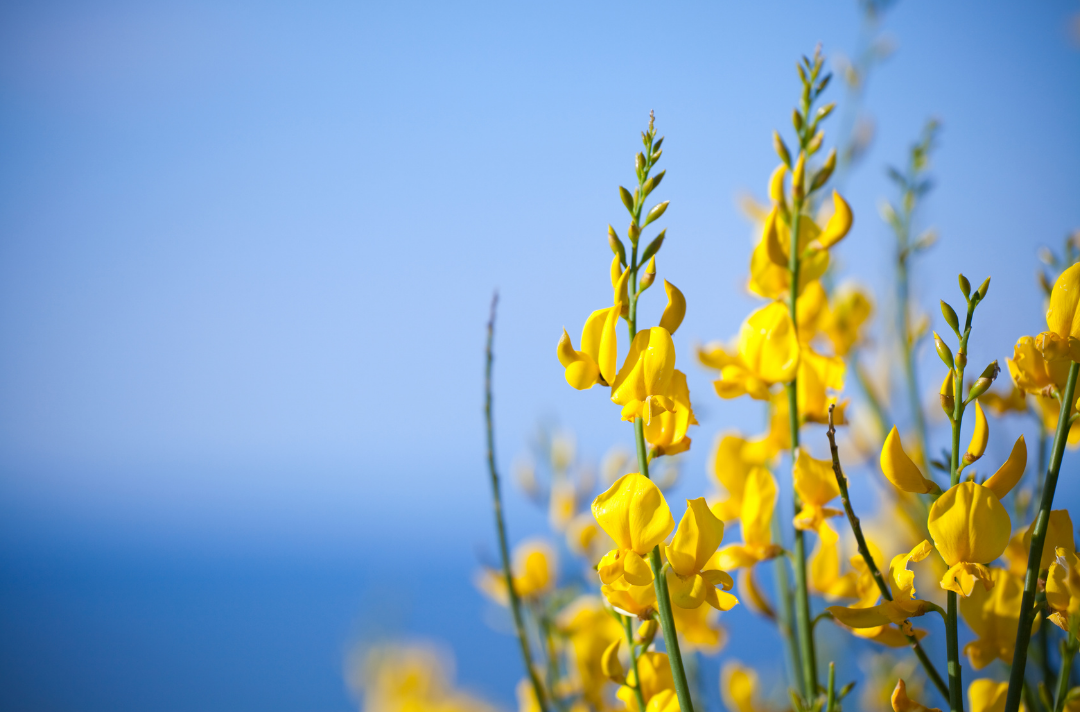
Spanish broom (Spartium juniceum) is a beautiful, hearty shrub with elegant yellow flowers. It is a fast-growing variety of the pea family, growing up to 10-15 feet tall in just a few years with roots that can extend several feet below the surface, even through rocky soil conditions. It was introduced to California in 1848 as durable landscape ornamental because of its draught-tolerant properties and ability to root in less than ideal soil. By the late 1930s, Spanish broom was planted along mountain highways to prevent erosion. So, why the fuss over such a pretty, practical plant? Originating in the southern Mediterranean region of Europe, Spanish broom is an invasive, non-native plant that has no natural local predators and provides no benefit to native insects and animals. With nothing to keep it in check, Spanish broom quickly overtakes resources — sunlight, nutrients, and water — needed by native plants, which are needed by area wildlife. Because it can grow in tall, dense patches and produce substantial dry matter, Spanish broom can also create a serious fire hazard during the dry season. How is Spanish broom removed? Removing Spanish broom isn’t easy, and must include pulling out the entire root system to deter it growing back stronger. It also involves specific training and diligent repetition. Even if the whole plant and root system are removed, seeds are a factor. One plant can produce 7,000 to 10,000 seeds in one season, and the seeds can remain viable for decades. A large seed bank is likely present in the soil around any mature Spanish broom plant. Seeds can also be moved to new locations by erosion, rain wash, and possibly ants. Parkway areas where Spanish broom has been removed in the past are likely to have new plants sprout for years to come, and the plant can also establish itself in new locations. Restoring the natural habitat is a slow process that requires regular monitoring and proper removal of Spanish broom on an ongoing basis. Identification Spanish broom plant identified and tagged. The first step with Spanish broom removal is accurately identifying the plants. When in bloom, the plants are more visible with their bright yellow flowers. However, after the plants have dropped their leaves, this becomes more difficult. Trained volunteers may need to scout and tag the shrubs for later removal during an Invasive Plant Management Program (IPMP) group event. Equipment Weed wrench tools. Because the root system is strong and must be removed completely, Spanish broom extraction requires special equipment, including a weed wrench designed to grip the base of the plant and gradually employ leverage to lift it out. This industrial tool costs about $250 each. Other useful tools are trowels and pickaxes to help loosen surrounding soil and dislodge rocks. Extraction Process Spanish broom root system. Ideally, the weed wrench removes the whole plant, roots and all. Extraction tends to
Continue Reading
28September
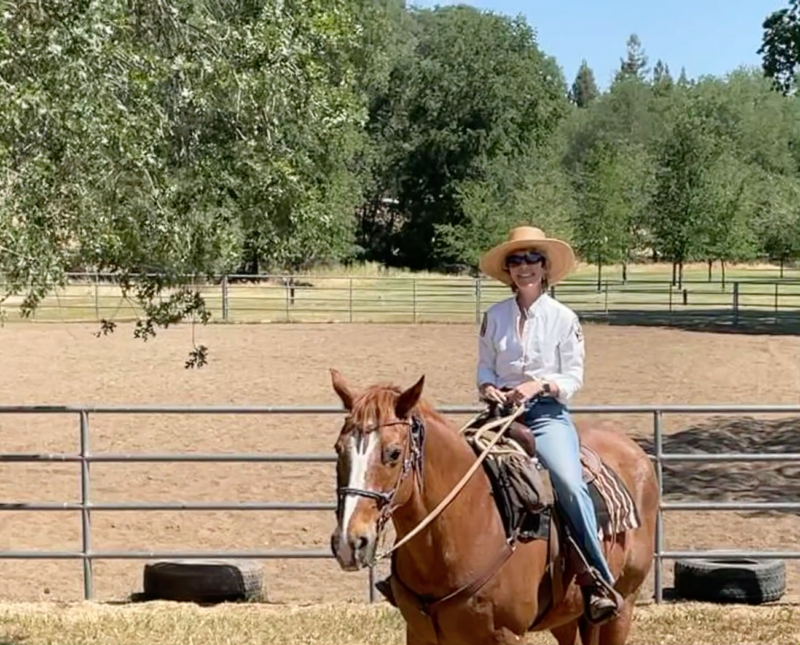
Volunteer Highlight: Sue Fossum
I moved to Sacramento from Los Angeles in 1974, newly married and a recent nursing school graduate. Since that time, I have enjoyed the serenity and beauty of the American River Parkway. From walking the family dog on dirt paths, teaching my two young sons to bike on the paved trail and paddling on the river in our canoe when they were in Cub/Boy Scouts, each time on the Parkway provided an experience to be immersed in its natural beauty and wonder. Since 1993, I have been privileged to enjoy the Parkway from the back of a horse, meandering down the trails. My rides often involve stopping when children and adults ask to pet my horse, educating them about horse behavior, providing directions — and, on occasion, providing some basic first aid. Since 1999, I have been a member of the American River Volunteer Equestrian Trail Patrol (ARVETP) which is how I became more involved in, and learned more about, the Parkway. The ARVETP, incorporated since 1995, has been working in concert with Sacramento County Regional Parks serving as ‘eyes and ears’ on the Parkway. It allows me to meet new people, talk about the amazing wonders of the Parkway, and how we can all be better stewards of the ‘jewel’ that is in our midst. Since 1998, the ARVETP has been an American River Parkway Foundation (ARPF) volunteer mile steward – first serving as volunteer stewards for Mile 10N, then Mile 3N and at present Mile 14S. Along with trash pickup and assistance with ARPF’s Great American River Clean Up (GARCU), members of the ARVETP have provided countless hours of trail maintenance. This trail maintenance is done, sometimes literally, from the back of a horse when riding on trails clipping overhanging branches that obstruct the trail for users. More involved and labor intensive work days have also occurred working with the ARPF, the California Conservation Corps, and Sacramento County Regional Parks staff to assist with cutting/removing downed trees, bushes that block trail access, placing signage, and opening up trails that have become overgrown and unused. Personally, I value the opportunity to represent the ARVETP as their ARPF volunteer mile steward, as it allows me to meet new people, talk about the amazing wonders of the Parkway, and how we can all be better stewards of the ‘jewel’ that is in our midst. Having walked, ridden a bike, canoed, kayaked and ridden a horse along the Parkway, I have to be honest in saying that riding my horse is my favorite activity. The slow pace of the trail allows me to see animal life up close, and I love stopping for people on the trail, allowing them to meet my horse. It is amazing how a horse becomes a ‘magnet’ providing me with the opportunity to share what a wonderful asset the Parkway is and how we can all support it and make the trails safe for everyone that wishes to use them.
Continue Reading


